

A personal loan is a lump sum you borrow for a personal purpose and repay in regular instalments, with interest, over a set term. Terms usually run from one to seven years, and amounts typically range from a few thousand dollars up to around $100,000, depending on the lender, your income and whether the loan is secured. Personal loans are regulated consumer credit under the National Consumer Credit Protection laws. Before approving you, a lender must make reasonable inquiries about your income and expenses, verify them, and make sure the loan isn't unsuitable for you. When a lender advertises an interest rate it must also show a comparison rate, which includes most fees, so you can compare loans fairly.
A secured personal loan uses an asset, usually a car, motorbike, boat or caravan, as security. Because the lender can sell the asset if you stop paying, secured loans generally come with lower interest rates and can allow larger amounts or longer terms. An unsecured personal loan needs no security, so your assets aren't at risk, but the rate is usually higher because the lender is relying on your income and credit history alone. Unsecured loans suit smaller amounts and purposes where there's nothing to secure, such as a holiday, medical costs or clearing debts.
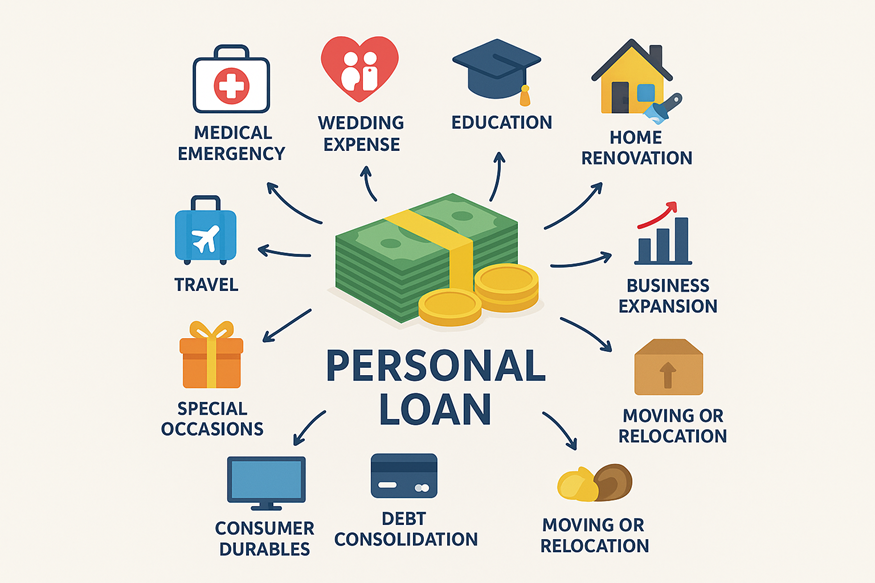
Most lenders will not lend for gambling, investing in shares or crypto, or paying a home deposit, and some limit how loans can be used for business purposes.

If you're juggling several credit cards, store cards or buy now pay later accounts, a debt consolidation loan pays them all out and leaves you with one repayment, one interest rate and a fixed date when you'll be debt-free. Because credit cards often charge 20% or more, moving the balance to a lower-rate personal loan can save a lot of interest. It only works if the old debts stay paid off. We recommend closing or reducing the limits on cards you've cleared, and we can arrange for the lender to pay your creditors directly. We'll also check whether consolidating is actually cheaper once fees are counted, and tell you if it isn't.
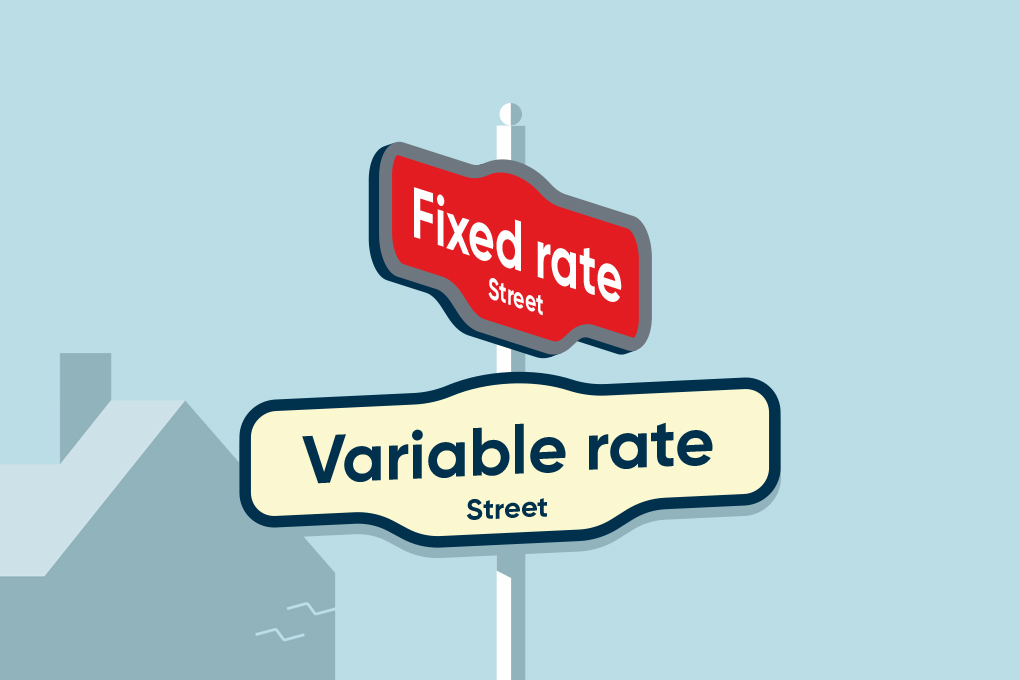
With a fixed rate your repayments stay the same for the whole loan, which makes budgeting easy. The trade-off is that some fixed rate loans charge a fee if you pay the loan off early or make large extra repayments. A variable rate can go up or down during the loan. Variable loans usually let you make extra repayments and pay out the loan early with little or no penalty, which suits you if you expect a bonus, tax refund or other lump sum. We'll show you both options side by side.

Many banks and specialist lenders offer lower rates for solar panels, home batteries, heat pump hot water, insulation and similar energy upgrades, and some of these loans are backed by government programs designed to make upgrades cheaper for households. The federal Cheaper Home Batteries Program also reduces the upfront price of an eligible battery installed by an accredited installer, so you may need to borrow less. We'll help you check what discounts apply before you choose how much to borrow.

A past default, late payments or a hardship arrangement doesn't always mean a no. Specialist lenders look at your whole situation, including how you're managing money now. Rates are higher, so we focus on a loan you can comfortably repay, which helps rebuild your credit history and puts you in a better position to refinance later. If you're self-employed and your tax returns aren't up to date, some lenders will assess your income using BAS statements, business bank statements or an accountant's declaration. Every application leaves an enquiry on your credit report, so we only apply where you have a good chance of approval.
You can get a free copy from Equifax and Experian every three months. Fixing an error, such as a debt you've already paid, before you apply can mean a better rate and a faster approval.
Tell us what the loan is for, how much you need and what you can comfortably repay.
We help you get your free credit report so there are no surprises.
Send us your ID, proof of income, recent bank statements, and details of your debts and living expenses.
We compare comparison rates, fees, and early repayment and extra repayment terms.
Read your contract carefully. We explain the key terms before you sign.
The money goes to your account, or straight to your creditors if you are consolidating debts.
| Option | Best for | Security | Rate | Typical term | Watch out for |
|---|---|---|---|---|---|
| Secured personal loan | Larger amounts, lowest rates | Car, boat, caravan or similar | Lower | 1–7 years | Asset can be repossessed if you default |
| Unsecured personal loan | Smaller amounts, any purpose | None | Higher | 1–7 years | Rate depends heavily on credit history |
| Debt consolidation loan | Combining several debts | Secured or unsecured | Lower than most cards | 1–7 years | Running old cards back up |
| Green loan | Solar, batteries, energy upgrades | Often unsecured | Discounted | Up to 7 years or more | Approved products and installers only |
| Specialist / bad credit loan | Past credit issues | Secured or unsecured | Higher | 1–5 years | Fees; compare the comparison rate |
| Low doc personal loan | Self-employed without recent tax returns | Often secured | Higher | 1–5 years | Fewer lenders to choose from |
A general guide only. Features and terms vary by lender.
| Product | How it works | Typical cost | Good for | Watch out for |
|---|---|---|---|---|
| Personal loan | Fixed amount, regular repayments, set end date | Lower than most cards for good-credit borrowers | Planned, larger expenses; debt consolidation | Establishment fees; early exit fees on some fixed loans |
| Credit card | Revolving limit, minimum repayments | Often around 20% p.a. or more on purchases | Short-term spending you clear each month | Debt that never ends if you only pay the minimum |
| Buy now pay later | Purchase split into instalments | Often no interest; late and account fees apply | Small purchases paid off quickly | Several accounts at once; now regulated credit |
| Payday loan (up to $2,000) | Short-term loan, 16 days to 1 year | Up to 20% establishment fee plus 4% a month | Rarely the best choice | Very expensive; repeat borrowing |
| Home loan redraw or top-up | Borrow against your home equity | Home loan rate, but over a longer term | Large renovations | Paying interest for up to 30 years; home is security |
It can, when the new loan’s rate is lower than the average rate on your current debts and you don’t take on new debt. Here’s a simple example.
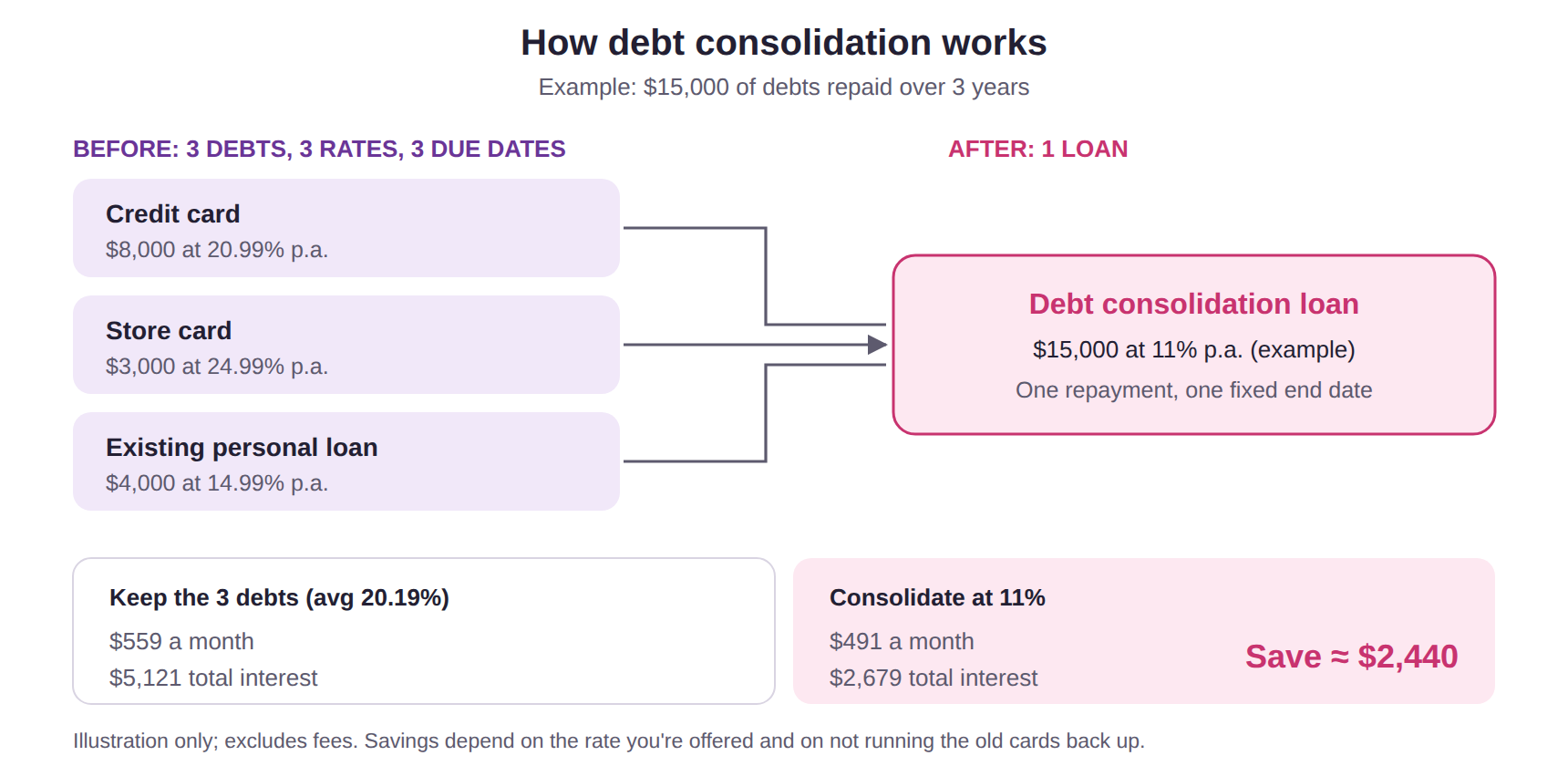
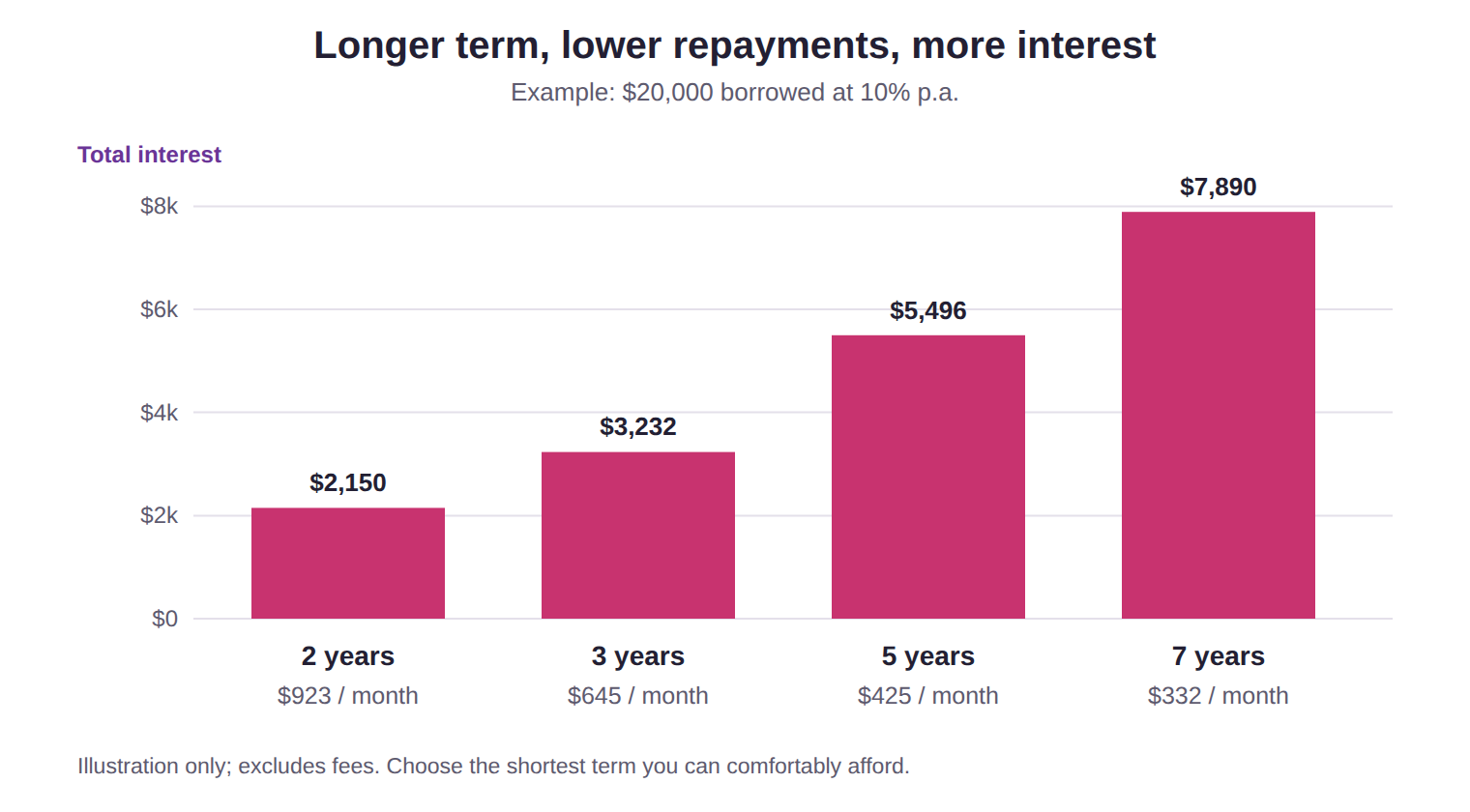
A longer term lowers each repayment but means you pay interest for longer. Pick the shortest term you can comfortably afford.
| Document | Employee (PAYG) | Self-employed, full doc | Self-employed, low doc |
|---|---|---|---|
| Photo ID (licence, passport) | ✓ | ✓ | ✓ |
| Recent payslips | ✓ usually 2 | ||
| Tax returns and notices of assessment | Sometimes | ✓ 1–2 years | |
| BAS statements | Sometimes | ✓ recent | |
| Bank statements | ✓ usually 3 months | ✓ | ✓ 6–12 months |
| Details of debts and living expenses | ✓ | ✓ | ✓ |
| Quote or invoice (renovation, solar, secured asset) | If relevant | If relevant | If relevant |
| Payout letters for debts being consolidated | If relevant | If relevant | If relevant |
| Information | How long it stays |
|---|---|
| Repayment history (on time or late) | 2 years |
| Financial hardship arrangement | 1 year |
| Credit enquiries (each application) | 5 years |
| Defaults (overdue $150 or more for 60+ days) | 5 years |
| Court judgments | 5 years |
Source: National Debt Helpline and the Office of the Australian Information Commissioner. You can request a free report from each credit reporting body every three months.
Each application leaves an enquiry on your credit report for five years, and several in a short time can make lenders think you're under financial stress. Let us compare lenders first, then apply to the one most likely to approve you at a good rate.
It depends on your income, living expenses, existing debts and credit history, and on whether the loan is secured. We will work out a realistic amount with you before you apply.
There is no single cut-off. A higher score usually means a lower rate, but specialist lenders also help people with lower scores or past credit issues.
Once you are approved and have signed the contract, many lenders pay the funds within one to three business days, and some on the same day.
Usually, yes. Variable rate loans generally allow early payout with little or no cost. Some fixed rate loans charge an early termination fee, so check your contract or ask us to compare.
A secured loan usually has a lower rate, but the asset can be repossessed if you cannot pay. An unsecured loan costs more but keeps your assets out of it. The right choice depends on your situation.
Applying adds an enquiry to your report, but paying off several debts and then making on-time repayments on one loan can improve your credit history over time.
Yes. Many lenders accept tax returns, and some offer low doc loans using BAS or bank statements.
Some lenders count certain government payments as income, usually alongside other income. Responsible lending rules still apply, so the loan must be affordable.
Common fees include an establishment fee, a monthly account fee, and sometimes late payment or early exit fees. The comparison rate helps you see the overall cost.
Brokers are usually paid a commission by the lender when a loan settles. We will give you our Credit Guide, which explains how we are paid and any fees, before we help you apply.
Book an Consultaiton



Kubaer Finance helps working families and migrants in Adelaide secure home, car, and investment loans with personalised guidance.